Actions on User Key/Host Key Inventory
You can perform the following actions from the Key Inventory page.
| Action | Description | ||||||||||||||||||||||
|---|---|---|---|---|---|---|---|---|---|---|---|---|---|---|---|---|---|---|---|---|---|---|---|
| Provision Key | You can provision a SSH key (user key, private key or key pair) to target hosts with optional vault integration. For provisioning a key, see Provision a Key. | ||||||||||||||||||||||
| Modify | You can modify the user key details and tags.
To modify the tags associated with a key, click the |
||||||||||||||||||||||
| Change status | Users with RW permission can change the status of a key to Managed or Monitored. | ||||||||||||||||||||||
| Export | You can export the user or host key details from their respective inventory in .csv or .xlsx format. | ||||||||||||||||||||||
| Download | You can download a key pair, private key, public key, or ssh certificate from the key inventories. Additionally, you can choose to download only the private key, only the public key, or both. | ||||||||||||||||||||||
| Upload User SSH key |
Note: This field appears only for User Key
Inventory.
|
||||||||||||||||||||||
| Revoke | Note: This field appears only for User Key
Inventory. Users with RW permission can revoke certificates
that are associated with keys that have a private key and key pair
(public + private). If the selection has even one key that is a public
key, then revoke is disabled. |
||||||||||||||||||||||
| Rotate | Users with RW permission can rotate selected user keys or host keys
based on the rotation configuration outlined in their corresponding key
policies. Keys selected for rotation are automatically backed up and
stored in a secure encrypted format in the Recently Rotated Keys.
The
details of backup are available in the audit log. On successful
completion of backup, a message appears in the audit log, Backup
completed for the <key type> for action <action> with name
<key name> with fingerprint <key fingerprint> with group name
<key group name> by the user <user
name>. On selecting keys for rotation, a
confirmation message appears. On confirming, the rotate operation is
triggered via workflow. To check the status and reports, go to
Automation > Service Request > All and select your
request from All requests. The newly rotated key adheres
to the following naming convention: KEYTYPE_TIMESTAMP, where key
type denotes the encryption algorithm of the key while
timestamp is when you have rotated the key in the
yyyyMMdd_HHmmss_SSS_counter format where: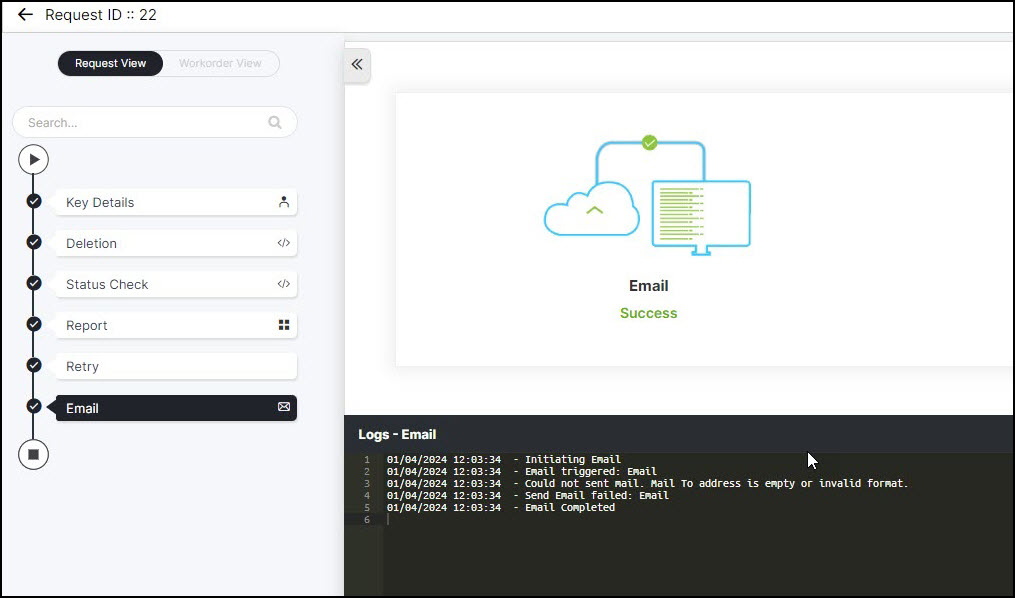 Note: If any of the selected keys or their file
paths are missing, the workflow will skip those keys and
continue processing the remaining rotations without failure. The
skipped keys will be listed in the Report
stage of the workflow with the status Skipped -
Missing.
Upon successful rotation of the key, the Comments field is updated. Important:
Best practices before rotating host keys:
Note: The following points are applicable
when the Enable Global Known hosts
option is enabled under  (Menu) icon >
SSH+ > Administration > Advanced Settings.
Enabling this option may have implications for your
network. (Menu) icon >
SSH+ > Administration > Advanced Settings.
Enabling this option may have implications for your
network.
Best practices before rotating user keys:
Note: The following points are applicable
when the Enable Global Authorized
keys option is enabled under (Menu) icon >
SSH+ > Administration > Advanced Settings.
Enabling this option may have implications for your
network.
CAUTION: Rotating keys can
result in access loss and authentication problems if AppViewX does
not have access to all the infrastructure information. Proceed with
caution and ensure proper backup and alternative authentication
methods are in place. |
||||||||||||||||||||||
| Delete | Users with RW permission can:
|
||||||||||||||||||||||
| Upload Bulk Tags | Bulk upload tags using one of the following options:
|
||||||||||||||||||||||
 icon next to the key, and update the tag details as
needed.
icon next to the key, and update the tag details as
needed.